The Cairngorms Up-Close: Gallery
[CAIRNGORMS UP-CLOSE] [DEEPGREEN.EARTH]
Category: WOODY PLANTS
Field maple (Acer campestre)

Where and when encountered: Nethy Bridge on 12 September 2025
About: Field maple – a tree of woodland, scrub, and hedgerows – is Great Britain's only native member of the genus Acer. It has a restricted distribution in the Scottish Highlands but is widespread elsewhere.
Norway maple (Acer platanoides)

Where and when encountered: Grantown-on-Spey on 8 September 2025
About: Norway maple is a species of tree introduced to Great Britain and widely planted but also becoming naturalized in habitats such as secondary woodland and rough grassland.
Sycamore (Acer pseudoplatanus)

Where and when encountered: Grantown-on-Spey on 16 September 2025
About: Sycamore is a species of tree introduced to Great Britain and widely planted but also naturalized in a wide variety of habitats.
Horse-chestnut (Aesculus hippocastanum)
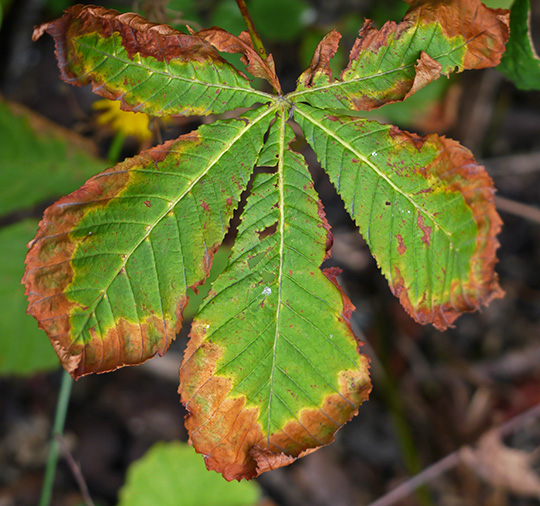
Where and when encountered: Grantown-on-Spey on 12 August 2026
About: Horse-chestnuts are widely planted non-native trees, growing as self-sown individuals in scrubland, rough grassland, and sometimes woodland too.
Alder (Alnus glutinosa)

Where and when encountered: Abernethy Forest on 22 June 2021
About: Alders are a common sight along riverbanks and in other wet places across Great Britain. Their seeds are dispersed on the wind, across water bodies, and down rivers and streams. A partnership with bacteria in nodules within the roots of these trees enables them to thrive in low-nutrient soils, where most other trees would struggle to become established.
Bearberry (Arctostaphylos uva-ursi)

Where and when encountered: Craigellachie NNR on 27 June 2022
About: Bearberry is a low-growing shrub and can be found on upland heaths and moorlands, generally over well-drained gravelly or rocky ground. In Great Britain, the plant's distribution is limited almost entirely to the Scottish Highlands.
Dwarf birch (Betula nana)

Where and when encountered: Cairngorms National Park on 12 April 2024
About: Dwarf birch is strikingly different from the two other members of the genus Betula native to Great Britain (downy and silver birch), being a prostrate shrub confined almost exclusively to the Scottish Highlands. This species is typically associated with blanket bog but may also be found on wet or dry heathland.
Editor's note: The photographed plant was not yet wild-growing, being a shrub raised from seed in a nursery in the Cairngorms.
Silver birch (Betula pendula)

Where and when encountered: Craigellachie NNR on 27 June 2022
About: Silver birch has a broad distribution across Great Britain and, along with the closely related downy birch, is among the most commonly encountered trees in the Scottish Highlands. Silver birches are generally found growing in well-drained soil, while downy birches are more abundant on wetter ground. Both silver and downy birches support a great diversity of other life-forms, including invertebrates and birds, and they form mycorrhizal relationships with various species of fungus.
Downy birch (Betula pubescens)

Where and when encountered: Abernethy Forest on 16 August 2021
About: Downy birch has a broad distribution across Great Britain and, along with the closely related silver birch, is among the most commonly encountered trees in the Scottish Highlands. Downy birches are more abundant on wetter ground, while silver birches are generally found growing in well-drained soil. Both downy and silver birches support a great diversity of other life-forms, including invertebrates and birds, and they form mycorrhizal relationships with various species of fungus.
Butterfly-bush (Buddleja davidii)
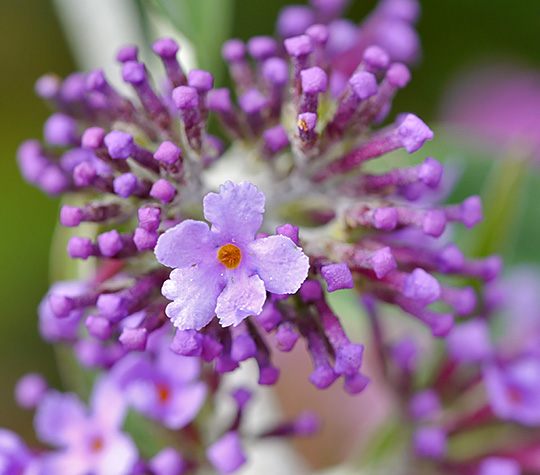
Where and when encountered: Blair Atholl on 22 August 2026
About: Butterfly-bush is a non-native deciduous or semi-evergreen shrub of abandoned quarries, tracksides, and various other habitats. The plant grows wild across much of Great Britain but is less common to the far north than elsewhere.
Box (Buxus sempervirens)
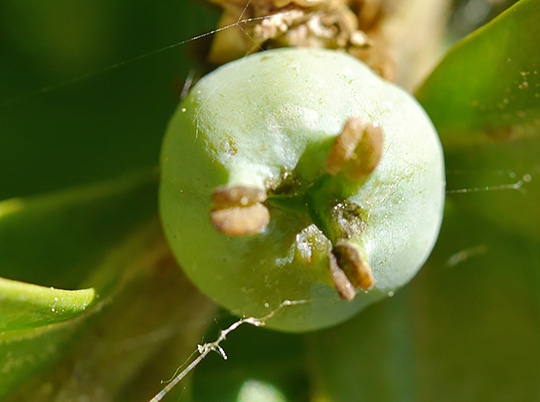
Where and when encountered: Blair Atholl on 21 June 2026
About: Box is a small tree of woodlands and thickets, especially on chalky ground. The species may be encountered in many corners of Great Britain, although less commonly in northern Scotland than elsewhere.
Heather (Calluna vulgaris)

Where and when encountered: Abernethy Forest on 16 August 2021
About: Heather (also known as 'ling') is the dominant low shrub of heathland, moorland, and open woodland on acid soil across much of Great Britain. The dominance relates, in part, to habitat-management practices that favour the species.
Hazel (Corylus avellana)

Where and when encountered: Tarrig Mhore on 30 March 2023
About: Hazel can be found growing almost anywhere in Great Britain, from the Isles of Scilly to the Shetlands.
Common hawthorn (Crataegus monogyna)

Where and when encountered: Blair Atholl on 9 June 2024
About: Common hawthorn can be found growing in most corners of Great Britain, with typical habitats including hedgerows, scrub, and open woodland (where the tree grows in the understorey layer). Common hawthorn can also be found surviving as scattered bushes on grazed land.
Common broom (Cytisus scoparius)

Where and when encountered: Rothiemurchus Estate on 2 June 2021
About: Common broom grows on sandy acidic soils, on heaths, in open woodland, on railway banks, and along stony riversides. The plant can be found in most parts of Great Britain and is host to a number of different species of invertebrate.
Editor's note: The flowers of most plants are pure-yellow in colour, but red-tinted aberrations are occasionally seen, as in the example photographed.
Crowberry (Empetrum nigrum)

Where and when encountered: Abernethy Forest on 26 August 2021
About: Crowberry is a low-growing shrub with a preference for well-drained acidic soils. The plant can be found across Scotland, northern England, and Wales.
Bell heather (Erica cinerea)

Where and when encountered: Abernethy Forest on 26 August 2021
About: Bell heather grows on well-drained, acidic soils across much of Great Britain, generally in open habitats but also as an occasional undershrub in pine or oak woodland where the canopy density is relatively low.
Cross-leaved heath (Erica tetralix)

Where and when encountered: Abernethy Forest on 16 August 2021
About: Cross-leaved heath grows across much of Great Britain, generally favouring wet heathland and moorland. The plant is named for the four-leaved whorls that emerge up the length of the flower-bearing stems.
Beech (Fagus sylvatica)

Where and when encountered: Anagach Woods on 2 August 2024
About: Beech is a tree of free-draining soils. While beech can be found growing from the far north to the far south of Great Britain, this distribution has been strongly influenced by planting, and some authorities consider the species to be truly native only to south-eastern England and south-eastern Wales. Others argue that in a wilder landscape, beech would have, by now, spread far from those areas without human aid.
Ash (Fraxinus excelsior)

Where and when encountered: Grantown-on-Spey on 12 June 2024
About: Ash is a tree of woodland, scrub, and hedgerows, with a preference for moist, basic soils and a tolerance of periodically waterlogged ground but a susceptibility to drought. The species may be encountered from the far north to the far south of Great Britain.
Petty whin (Genista anglica)

Where and when encountered: Abernethy Forest on 29 June 2022
About: Petty whin is a spiny shrub of heathy areas, especially those that are damp. The plant has disappeared from much of England and southern Scotland, with the parallel decline in heathland habitat in general.
Common ivy (Hedera helix)

Where and when encountered: Grantown-on-Spey on 1 September 2024
About: Common ivy can be found growing as a climber in almost all parts of Great Britain.
Common rock-rose (Helianthemum nummularium)

Where and when encountered: Anagach Woods on 13 June 2024
About: Common rock-rose is a prostate woody plant with a somewhat patchy distribution in Great Britain. The species is essentially confined to chalk and limestone soils in England but tolerates mildly acid grassland in parts of Scotland.
Holly (Ilex aquifolium)

Where and when encountered: Anagach Woods on 8 November 2025
About: Holly is the only broadleaved evergreen tree native to Great Britain. Typically growing as part of a woodland's understory, especially on acidic soils, this species is absent from some of the more mountainous areas of Scotland but may be encountered in most other corners of Great Britain.
Juniper (Juniperus communis)

Where and when encountered: Abernethy Forest on 26 August 2021
About: Juniper grows as both an understory shrub and a small tree in various parts of Great Britain but is especially abundant in the Scottish Highlands. The dense, spiny foliage is favoured by birds such as goldcrests and song thrushes for the siting of nests. Sadly, the species in declining in Great Britain.
European larch (Larix decidua)

Where and when encountered: Dulnain Bridge on 11 October 2025
About: European larch is a non-native tree species that, principally for forest interests, has been planted – and become naturalized – widely in Great Britain.
Honeysuckle (Lonicera periclymenum)

Where and when encountered: Anagach Woods on 20 April 2024
About: Honeysuckle grows as a twining shrub or a woody climber – in woodland, scrub, and hedgerows, or on shaded rocks – and can be found in most corners of Great Britain.
Bog myrtle (Myrica gale)

Where and when encountered: Uath Lochans on 13 June 2022
About: Bog myrtle is a small shrub and grows in suckering thickets. Non-alkaline soil with non-stagnant groundwater and no more than light shade is the typical habitat, and the plant is much more prevalent in the uplands than the lowlands. The foliage is avoided by grazers.
Editor's note: The sweet aroma that lifts off the leaves is, to my nose at least, divine.
Norway spruce (Picea abies)

Where and when encountered: Nethy Bridge on 5 August 2024
About: Norway spruce is a widely planted non-native conifer in Great Britain.
Scots pine (Pinus sylvestris)

Where and when encountered: Anagach Woods on 17 June 2021
About: Scots pines have been widely planted in Great Britain and have become naturalized in some places with acidic soils. They are only native, however, to Caledonian pine forest, where they are the largest, the longest-lived, and the numerically dominant species of tree. Numerous other species are either partially or wholly dependent on the food, materials, and shelter that are provided by this species.
Aspen (Populus tremula)

Where and when encountered: Grantown-on-Spey on 5 November 2021
About: Aspens grow in clonal colonies, in which they spread by suckering, and they can be found throughout Great Britain.
Gean (Prunus avium)

Where and when encountered: Grantown-on-Spey on 28 October 2025
About: Gean (also known as 'wild cherry') can be found growing in most parts of Great Britain, occurring without human agency in deciduous woodland and hedges but also being widely planted.
Bird cherry (Prunus padus)

Where and when encountered: Nethy Bridge on 11 May 2024
About: This tree can be found growing in most parts of Great Britain and favours moist mature and scrubby woodland, the sides of streams and rivers, and shady rocky places.
Blackthorn (Prunus spinosa)

Where and when encountered: Tarrig Mhore on 17 August 2025
About: Blackthorn is a suckering and seed-spreading woody plant with a tolerance for a wide variety of soils. The species can be found growing in most parts of Great Britain, with the only major gaps in distribution being centred on the high mountains of northern Scotland.
Sessile oak (Quercus petraea)

Where and when encountered: Anagach Woods on 17 September 2025
About: Sessile oak can be found growing in most corners of Great Britain. The species thrives on well-drained, shallow, acidic soils and is the characteristic oak of the uplands.
Pedunculate oak (Quercus robur)

Where and when encountered: Blair Atholl on 9 June 2024
About: Pedunculate oak can be found growing in most corners of Great Britain, although the tree struggles on thin soil over limestone or acidic peat and is unknown from ground above 500 metres' elevation.
Rhododendron (Rhododendron ponticum)

Where and when encountered: Castle Grant on 10 May 2026
About: This non-native evergreen shrub grows in various habitats including heathy and rocky hillsides, rocky stream banks, and woodland with acid soil. The species regenerates from seed freely, often forming dense thickets over large areas, and can be found from the far north to the far south of Great Britain.
Black currant (Ribes nigrum)

Where and when encountered: Blair Atholl on 24 September 2025
About: Black currant is a shrub of hedgerows, wet woodland, and other damp habitats. Possibly native to East Anglia, but otherwise (if not entirely) present through naturalization as an escape from cultivation, the species can be found from the far north to the far south of Great Britain.
Downy currant (Ribes spicatum)

Where and when encountered: Kingussie on 29 June 2025
About: Downy currant is a small shrub with a distribution in Great Britain concentrated mostly in northern England and northern Scotland. In the latter, the species is associated with the spate zone of shaded streamsides and riversides.
Gooseberry (Ribes uva-crispa)
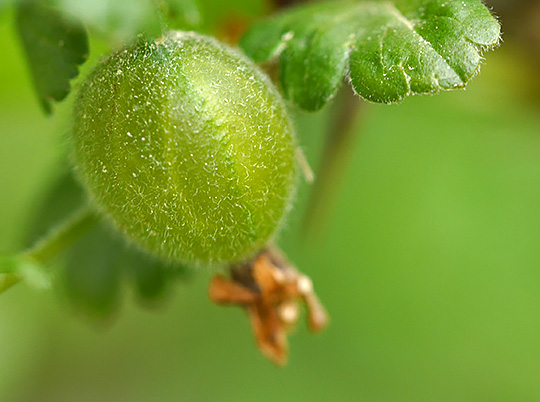
Where and when encountered: Grantown-on-Spey on 31 May 2026
About: There are records of gooseberry being grown under cultivation in Great Britain since as early as the thirteenth century, and the plant can be found in the wild as a garden escape – especially in deciduous woodland, hedges, and scrub – throughout most of the country.
Years with at least one adult record: 2026 (1)
Dog rose (Rosa canina agg)

Where and when encountered: Blair Atholl on 9 June 2024
About: Dog rose (a species aggregate) may be encountered in most corners of Great Britain, with typical habitats including hedgerows, scrub, woodland margins, and old railway banks and quarries.
[NBN ATLAS (SCOTLAND) DATA FOR SPECIES]
[NBN ATLAS (SCOTLAND) DATA FOR AGGREGATE]
Bramble (Rubus fruticosus agg)

Where and when encountered: Aviemore on 23 June 2024
About: Bramble – a stand-forming shrub with a widespread distribution in Great Britain – is the vernacular name for an aggregate of numerous micro-species.
[NBN ATLAS (SCOTLAND) DATA FOR SPECIES]
[NBN ATLAS (SCOTLAND) DATA FOR AGGREGATE]
Wild raspberry (Rubus idaeus)

Where and when encountered: Nethy Bridge on 24 June 2022
About: Wild raspberries, including both true natives and escapees from cultivation, can be found growing throughout Great Britain in a variety of habitats. The plant spreads by bird-dispersal of the seeds, as well as by suckering.
Editor's note: The petals of wild raspberry detach readily in the gentlest of breezes, but, even without them, the flowers remain popular with bumblebees and other nectar- and pollen-seeking insects.
Eared willow (Salix aurita)

Where and when encountered: Abernethy Forest on 28 October 2021
About: Named for the opposite pair of small stipules at the base of the petiole, this heavily branching shrub grows on acidic soil and, while widespread in Great Britain, is most commonly encountered in the uplands.
Goat willow (Salix caprea)

Where and when encountered: Abernethy Forest on 12 September 2025
About: Goat willow is a shrub or tree found in range of habitats, including those with drier soil than some closely related species of willow will tolerate. The species is widespread in Great Britian, with gaps in the distribution occurring only in the very far north of Scotland.
Grey willow (Salix cinerea)

Where and when encountered: Speybridge on 17 September 2025
About: Grey willow is a shrub or tree found in damp habitats, including wet woodlands and riversides. The species is widespread in Great Britian.
Downy willow (Salix lapponum)

Where and when encountered: Cairngorms National Park on 21 June 2024
About: Downy willow in a low-growing montane shrub of rocky mountain slopes and cliffs. In Great Britain, the plant is almost entirely restricted to the Scottish Highlands.
Editor's note: The photographed plant was not yet wild-growing, being a shrub raised from seed in a nursery in the Cairngorms.
Creeping willow (Salix repens)
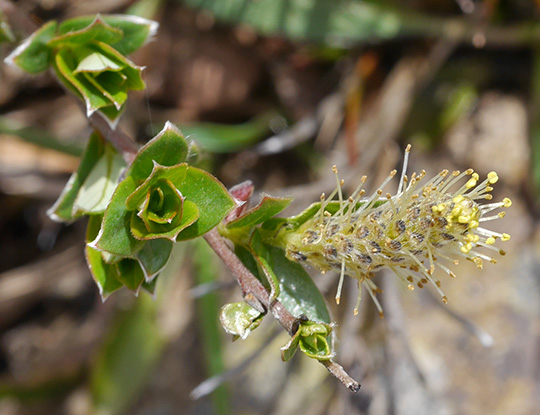
Where and when encountered: Glenfeshie on 11 May 2026
About: This shrub grows in various habitats and can be found from the far north to the far south of Great Britain but is somewhat confined to damper habitats towards the south and east of this range.
Elder (Sambucus nigra)

Where and when encountered: Tomintoul on 2 September 2025
About: Elder is a deciduous woody plant with a preference for fertile soil. The species can be found in a wide range of habitats in most corners of Great Britain.
Common whitebeam (Sorbus aria)

Where and when encountered: Anagach Woods on 17 September 2025
About: Common whitebeam grows as a native tree in scrub and open woodland in southern Great Britain but is more widespread as an introduction.
Rowan (Sorbus aucuparia)

Where and when encountered: Nethy Bridge on 26 August 2021
About: Rowans are fast-growing, relatively short-lived trees with berries that provide a food source for birds such as fieldfares and redwings. The species can be found in most parts of Great Britain but is more common in the north and the west. Rowans grow at a higher altitude than any other species of tree in Great Britain, and, in parts of the Scottish Highlands, occur at elevations approaching 1000 metres.
Snowberry (Symphoricarpos albus)
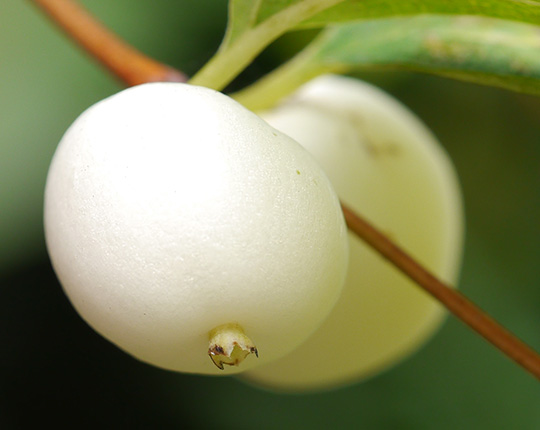
Where and when encountered: Blair Atholl on 22 August 2026
About: Snowberry is a non-native, deciduous, vigorously suckering shrub of hedgerows and wooded areas. The species has been widely planted and may be encountered across much of Great Britain, although less commonly in the Scottish Highlands than elsewhere.
Yew (Taxus baccata)

Where and when encountered: Blair Castle grounds on 21 June 2026
About: Yew is generally a tree of well-drained calcareous soils but also grows in certain localities over acidic rocks. The species may be encountered in most corners of Great Britain, although much less commonly in inland parts of northern Scotland than elsewhere.
Wild thyme (Thymus polytrichus)

Where and when encountered: Sluggan (Carrbridge) on 8 July 2022
About: The delicately fragrant wild thyme is by far the most abundant and widespread species of thyme in Great Britain, and the plant can be found in a broad range of situations, typically growing in a low spreading form.
Common lime (Tilia x europaea)

Where and when encountered: Grantown-on-Spey on 15 June 2024
About: Common lime – a hybrid between Great Britain's two native limes (the small-leaved and the large-leaved) – has a widespread distribution in the country, although most trees grow as a result of planting rather than natural crossing.
Editor's note: The photographed tree was not truly wild-growing, being a planted street tree.
Common gorse (Ulex europaeus)

Where and when encountered: Abernethy Forest on 22 June 2021
About: Common gorse favours mildly acidic soils and can be found across the length and breadth of Great Britain. The shrub supports numerous species of insect and also offers an attractive nesting site for various species of birds, on account of the dense spine-covered branches.
Wych elm (Ulmus glabra)

Where and when encountered: Blair Atholl on 9 June 2024
About: Wych elm is – atypically for the genus Ulmus – a generally non-suckering tree. The tree may be encountered in most corners of Great Britain, generally growing on base-rich soils.
Small cranberry (Vaccinium microcarpum)

Where and when encountered: Uath Lochans on 13 June 2022
About: Small cranberry, a trailing dwarf shrub, can be found in Sphagnum bog and in Great Britain is almost entirely restricted to the Scottish Highlands.
Blaeberry (Vaccinium myrtillus)

Where and when encountered: Rothiemurchus Estate on 31 May 2021
About: Blaeberry is a common – sometimes locally dominant – species on well-drained heathland and moorland and in the understory of oak, birch, and pine woodland. The species does not tolerate calcareous soil and is mostly restricted to upland areas. Capercaillies are a species for whom blaeberry is particularly important in their survival. Juvenile and adult birds feed on various parts of the plant, while chicks benefit from the shelter that is provided and also gain an important source of nourishment from the associated insect life.
Bog bilberry (Vaccinium uliginosum)
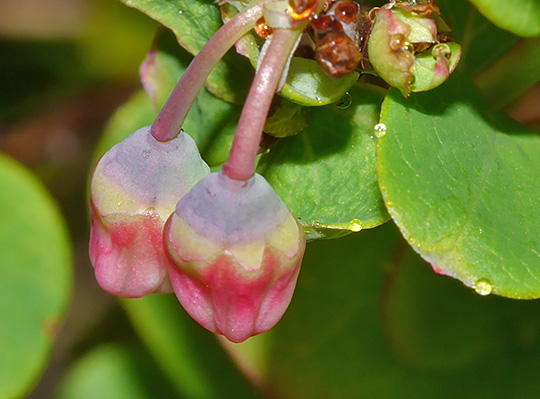
Where and when encountered: Cairngorms north-western slopes on 1 June 2026
About: This shrub favours the peaty acidic soils of upland heaths and blanket bogs. Most of the plant's distribution in Great Britain lies in the Scottish Highlands.
Cowberry (Vaccinium vitis-idaea)

Where and when encountered: Anagach Woods on 17 June 2021
About: Cowberry grows on heathland and moorland, as well as in the understory of oak, birch, and pine woodland. The species does not tolerate calcareous soil and is mostly restricted to upland areas.
Guelder-rose (Viburnum opulus)

Where and when encountered: Blair Atholl on 24 September 2025
About: Guelder-rose is a shrub of non-acidic soil with a preference for damp habitats. Other in the north of Scotland, where the distribution is patchy, this species is now common across much of Great Britain. It should be noted, though, that the national distribution has been significantly expanded by planting schemes and bird-mediated spread of the resulting seeds.
Selected galleries
[ALL-TIME HIGHLIGHTS] [ARCTIC ALPINE PLANTS] [BUMBLEBEES] [BUTTERFLIES] [COLOURFUL MOTHS] [DRAGONFLIES] [FORBS] [GALLS] [GRASSLAND ORCHIDS] [INSECTS OF EXPOSED RIVER SEDIMENT] [LONGHORN BEETLES] [PINE-ASSOCIATED FUNGI] [PLANT BUGS] [SAWFLIES (ADULTS)] [SHIELDBUGS] [SOCIAL WASPS] [TRUE FLIES: AWL-FLIES] [TRUE FLIES: CRANEFLIES] [TRUE FLIES: DANCE FLIES] [TRUE FLIES: DUNG FLIES] [TRUE FLIES: FRUIT FLIES] [TRUE FLIES: HOVERFLIES] [TRUE FLIES: HOUSE FLIES] [TRUE FLIES: MARCH FLIES] [TRUE FLIES: ROBBERFLIES] [TRUE FLIES: SNIPEFLIES] [TRUE FLIES: SOLDIER FLIES] [TRUE FLIES: TACHINID FLIES] [TRUE FLIES: THICK-HEADED FLIES] [TRUE FLIES: TREMBLING-WING FLIES] [UNCOMMON PINEWOOD HERBS] [WOODY PLANTS]